
Why Does Your Skin Need Night Cream While You Sleep?
Your skin goes through a lot during the day . Sunlight , dust , pollution , heat , makeup and daily stress can all affect the way your skin looks and feels . But what happens to your skin when you go to sleep?
Nighttime is an important part of your skincare routine. While you sleep , your body gets a chance to rest and recover . Your skin also goes through its natural renewal process during this time . This is why using the right skincare products before bed can be helpful.
A Night Cream can provide moisture and support your skin while you sleep . It can help dry skin feel softer , support the skin barrier and make your skin look more comfortable and refreshed in the morning .
But does everyone need one? And what exactly does a night cream do ?
Let’s understand it in very simple words .
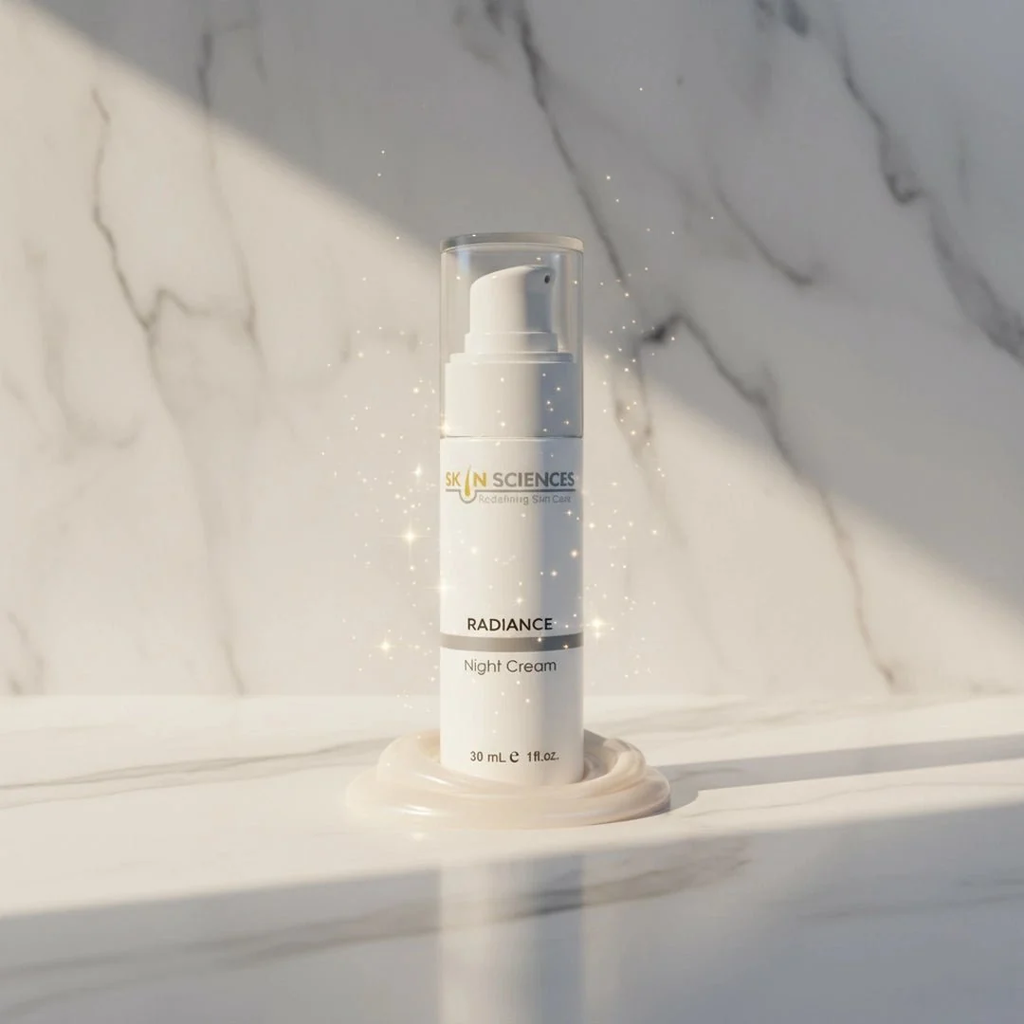
What Is a Night Cream?
A night cream is a skincare product designed to be used as part of your nighttime routine.
Unlike some lightweight daytime products , night creams are often made with moisturizing ingredients that help keep the skin hydrated for longer . Depending on the formula , a night cream may also contain ingredients that support concerns such as dryness , uneven texture or signs of skin aging.
You normally apply it after cleansing and after lighter skincare products such serums .
A simple nighttime routine can look like this :
Cleanser → Serum → Night Cream
The exact routine can change depending on your skin type and other products you use .
Why Does Your Skin Need Night Cream While You Sleep?
Your skin does not simply “switch off ” when you sleep.
It continues performing its natural functions. Your skin is exposed to many environmental factors during the day , so nighttime gives you an opportunity to focus on hydration and skincare .
Here are some reasons people may choose to include a night cream in their routine .
1. It Helps Keep Skin Hydrated
One of the main purpose of a night cream is to help reduce moisture loss.
When your skin does not have enough moisture , it may feel:
- Dry
- Tight
- Rough
- Uncomfortable
- Flaky
A moisturizer product can help the skin feel softer and more comfortable .
This can be especially useful if you have naturally dry skin or your skin becomes dry because of weather, air conditioning or strong skincare products.
2. It Supports the Skin Barrier
Your skin barriers is like a protective shield.
It helps keep useful moisture inside your skin and helps protects your skin from outside irritants.
When the skin barrier becomes weak , your skin may become dry , rough or more sensitive.
A good nighttime moisturizer can help support this barrier by providing hydration and using ingredients that helps the skin stay moisturized.
This does not mean a cream can repair every skin problem . However , keeping the skin properly moisturized is an important part of basic skincare.
3. It Gives Dry Skin Extra Care
Dry skin often needs more moisture than oily skin.
If your face feels tight washing or become flaky during the day, your nighttime routine can be a good time to focus on hydration.
A richer moisturizing formula can help dry skin feel softer over night.
However , people with oily or combination skin do not necessarily need a very heavy cream .
Choosing a product based on your skin type is important.
4. It Can Make Skin Feel Softer in the Morning
Have you ever washed your face in the morning and noticed that your skin feels soft and comfortable ?
A good nighttime moisturizing routine can contribute to that feeling.
While you sleep , the product stays on your skin for several hours . This gives moisturizing ingredients time to support hydration.
The result can be skin that feels smoother and less dry when you wake up.
5. It Helps Your Skin Deal With Daily Dryness
Your skin faces different environmental conditions every day.
Hot weather, cold weather, air conditioning, dry air, and frequent washing can all affect skin moisture.
A nighttime moisturizer gives you another opportunity to add hydration to your routine.
Think of it like giving your skin a little extra care before starting a new day.
What Happens to Your Skin During Sleep?
Sleep is important for your overall health, and your skin also goes through changes while you sleep.
Your body uses nighttime as a period of rest and recovery. The skin continues its natural renewal processes during this time.
However, it is important not to believe every skincare claim you see online.
Your skin does not suddenly “repair everything” overnight just because you apply a cream.
Skincare products work as part of a routine. Their results depend on the ingredients, formula, your skin type, and how consistently you use them.
This is why a simple and realistic skincare routine is usually better than using many products at once.
Can Night Cream Help With Dull Skin?
Dull skin can have many causes.
Lack of moisture, dead skin cells, environmental exposure, and your natural skin condition can all affect how your skin looks.
A moisturizing cream can help dry skin look healthier and more comfortable by improving its hydration.
Some night creams also contain ingredients that are designed to support a more even-looking complexion.
However, a night cream is not an instant solution for every cause of dullness.
For brighter-looking skin, your overall routine matters. Cleansing, moisturizing, using suitable active ingredients, and protecting your skin from the sun during the day all play a role.
Can Night Cream Help With Fine Lines?
Some night creams contain ingredients that support the appearance of smoother and healthier-looking skin.
Hydration can temporarily make some fine lines look less noticeable because well-moisturized skin can appear smoother.
Some formulas may also contain ingredients such as retinol, peptides, or other skincare actives that are commonly used in anti-aging routines.
However, not every night cream contains these ingredients.
So, always check the product label instead of assuming that every night cream provides the same benefits.
Is Night Cream Good for Oily Skin?
Yes, oily skin can still need moisture.
Many people with oily skin make the mistake of avoiding moisturizer completely because they think it will make their face more oily.
But oily skin and dehydrated skin are not the same thing.
If you have oily skin, look for a lightweight, non-greasy formula that feels comfortable on your face.
The goal is not to make your skin feel heavy. The goal is to give it the moisture it needs.
Is Night Cream Good for Acne-Prone Skin?
People with acne-prone skin need to be more careful when choosing skincare products.
A heavy or unsuitable product may not feel comfortable on acne-prone skin.
If you have acne-prone skin, look for a formula that suits your skin type and does not feel overly greasy or heavy.
Also remember that a night cream is a moisturizer, not automatically an acne treatment.
If you have painful, severe, or persistent acne, it is better to speak with a dermatologist rather than trying to treat it only with skincare products.
How to Choose the Right Night Cream
Choosing the right product starts with understanding your skin.
For Dry Skin
Look for moisturizing ingredients that help support hydration and the skin barrier.
Ingredients such as hyaluronic acid, glycerin, ceramides, and certain emollients may be useful depending on the formula.
For Oily Skin
Choose a lightweight formula that does not leave your face feeling overly greasy.
Gel creams or lightweight moisturizers may feel more comfortable for some people.
For Combination Skin
You may need a balance between hydration and a lightweight texture.
Pay attention to the areas of your face that become dry and the areas that become oily.
For Sensitive Skin
Keep your routine simple.
Look for gentle formulas and avoid adding many strong active ingredients at the same time.
If a product causes burning, significant redness, or continued irritation, stop using it and consider speaking with a dermatologist.
When Should You Apply Night Cream?
Night cream is usually applied near the end of your nighttime skincare routine.
A basic routine can be:
1: Clean Your Face
Use a gentle cleanser to remove dirt, oil, sunscreen, and makeup.
2: Apply Serum
If you use a serum, apply it according to its instructions.
3: Apply Night Cream
Apply a suitable amount of your night cream and spread it gently over your face.
You do not need to apply a very thick layer.
More product does not always mean better results.
Can You Use Serum and Night Cream Together?
Yes.
A serum and night cream can be used together because they serve different purposes.
Serums are often lightweight and designed to deliver specific ingredients.
Night creams are usually focused more on moisturizing and supporting the skin barrier.
For example:
Cleanser → Serum → Night Cream
If your serum contains a strong active ingredient, such as retinol or an exfoliating acid, make sure the products in your routine are suitable for use together.
When starting a new active ingredient, introduce it slowly.
Should You Use Night Cream Every Night?
If the product suits your skin, you can generally use a moisturizing night cream as part of your regular nighttime routine.
Consistency is more important than applying a large amount once in a while.
However, everyone’s skin is different.
If your skin becomes irritated after using a product, do not simply keep applying more. Check the ingredients, reduce the number of active products in your routine, or speak with a skincare professional if the irritation continues.
Skin Sciences and Nighttime Skincare
A good skincare routine does not have to be complicated.
Skin Sciences focuses on practical skincare solutions that can fit into a simple daily routine. A suitable night cream can be one part of that routine, especially when your main goal is to keep your skin moisturized and comfortable overnight.
The important thing is to choose products according to your skin’s needs instead of following every skincare trend.
Your skin does not need dozens of products.
It needs the right care, used consistently.
Common Mistakes People Make With Night Cream
Even a good skincare product may not work well if you use it incorrectly.
Here are some common mistakes to avoid.
Using Too Much Product
Applying a thick layer does not guarantee better results.
Use an amount that comfortably covers your face.
Applying It to Dirty Skin
Night cream should generally be applied after cleansing.
Putting skincare products over dirt, makeup, or excess oil is not a good replacement for proper cleansing.
Choosing a Product Without Considering Your Skin Type
A very heavy cream may not feel comfortable on oily skin, while a very light product may not provide enough moisture for very dry skin.
Choose according to your skin’s needs.
Expecting Overnight Results
Your skin will not completely change after one night.
Good skincare usually requires consistency and patience.
Using Too Many Active Ingredients
Adding several strong skincare ingredients at once can increase the chance of irritation.
Keep your routine simple, especially when trying a new product.
Simple Nighttime Skincare Routine
If you are confused about what to use before bed, keep it simple.
1. Cleanser
Remove dirt, oil, sunscreen, and makeup.
2. Serum
Use a serum if it suits your skin and your skincare goals.
3. Night Cream
Apply a suitable moisturizing cream to help keep your skin hydrated.
4. Sleep
Give your body and skin time to rest.
In the morning, remember to use sunscreen as the final step of your daytime skincare routine.
Final Words
So, why does your skin need night cream while you sleep?
The main reason is simple: nighttime gives you a chance to focus on hydration and skin comfort.
A good night cream can help keep the skin moisturized, support the skin barrier, and make dry or rough skin feel softer. Some formulas may also contain ingredients that target specific concerns such as uneven tone, fine lines, or dullness.
But you do not need a complicated routine.
Choose a product that matches your skin type, apply it after cleansing, use other active ingredients carefully, and give your routine enough time to work.
Most importantly, remember that healthy-looking skin comes from consistent care—not from using the largest number of products.
Frequently Asked Questions
1. Why is night cream important for the skin?
Night cream can help provide moisture while you sleep. It may help dry skin feel softer and support the skin barrier.
2. Can I use night cream every night?
Yes, if the product suits your skin and does not cause irritation. Follow the product’s directions for the best results.
3. Can oily skin use night cream?
Yes. Oily skin still needs hydration. Choose a lightweight formula that feels comfortable and does not leave your skin excessively greasy.
4. Can night cream remove dark spots?
A moisturizing night cream alone cannot remove all dark spots. Some formulas contain ingredients that may help improve the appearance of uneven pigmentation, but results depend on the cause of the spots and the ingredients used.
5. Can night cream help dry skin?
Yes. A suitable moisturizing cream can help reduce the feeling of dryness and make the skin feel softer and more comfortable.
6. Should I apply serum before night cream?
Usually, yes. A common order is cleanser, serum, and then moisturizer. However, always follow the instructions for your specific products.
7. Can I use retinol with night cream?
Yes, depending on the formula. Retinol is commonly used at night, and moisturizer can help with dryness. However, combining several active ingredients can increase irritation, so introduce products carefully.
8. How much night cream should I use?
You generally only need enough to apply a comfortable, even layer over your face. Using more product does not automatically give better results.
9. Is night cream suitable for sensitive skin?
It can be, but sensitive skin may react to certain ingredients. Choose a gentle formula and stop using it if you experience significant or persistent irritation.
10. Does night cream make skin fair?
A night cream should not be expected to change your natural skin color. A suitable product may help improve hydration and the appearance of uneven skin tone, depending on its ingredients.
11. When should I apply night cream?
Apply it as part of your nighttime routine, usually after cleansing and applying any suitable serum.
12. How long does night cream take to work?
Moisturizing effects can sometimes be felt quickly, but other skin concerns may take much longer to improve. Results depend on the ingredients, your skin, and consistent use.