
Best Vitamin C Serum
A Complete Guide for Brighter Skin
Dull skin, dark spots, and uneven pigmentation are common concerns for people living in Pakistan. Long hours in the sun, dust, pollution, and hot weather can make skin look tired, while acne marks may take months to fade. If you are searching for the best vitamin C serum, choosing the right formula is more important than buying the most expensive bottle.
Vitamin C is an antioxidant that can help brighten the appearance of skin, support collagen production, and reduce the visible effects of environmental damage. However, not every serum suits every skin type.
In this guide, you will learn how vitamin C works, which ingredients to look for, how to choose a serum for sensitive or oily skin, and how to use it safely. We will also discuss vitamin C serum prices in Pakistan, common mistakes, and ways to protect your product from the heat.
Why Vitamin C Serum Is Essential for Pakistani Skin
Pakistan has a wide range of climates, but many people experience strong sunlight, high temperatures, dust, and urban pollution. Regular exposure to ultraviolet (UV) radiation can contribute to pigmentation, premature skin ageing, and collagen breakdown.
Sunscreen remains the most important product for protecting skin from UV damage. Vitamin C serum adds another layer of antioxidant support. It helps neutralize certain free radicals, which are unstable molecules that can damage skin cells.
Vitamin C serum benefits
A well-formulated vitamin C serum may help with:
- Brighter-looking skin: Vitamin C can reduce the appearance of dullness and uneven tone.
- Pigmentation: It may help improve the appearance of some dark spots with consistent use.
- Sun-related discolouration: It can support a skincare routine designed to manage the visible effects of sun exposure.
- Collagen support: Vitamin C is involved in collagen production, which helps maintain skin structure.
- Antioxidant protection: It helps support the skin against oxidative stress caused by environmental factors.
Dermatologists recommend combining antioxidant skincare with broad-spectrum sunscreen rather than relying on a serum alone. Vitamin C does not replace SPF, and it cannot prevent all forms of sun damage.
Many readers from Lahore and Karachi have told us that their skin looks more uneven during the hotter months. This is understandable: more outdoor exposure, sweating, and inconsistent sunscreen use can make pigmentation harder to manage. A simple routine with vitamin C, moisturizer, and sunscreen is often more useful than adding several strong products at once.
Best Vitamin C Serum What to Look For
Choosing the best vitamin C serum starts with understanding its concentration, form, packaging, and supporting ingredients. A higher percentage is not automatically better.
1. Choose an appropriate concentration
For many adults, a vitamin C concentration of around 10–20% is a reasonable range to consider. Beginners and people with sensitive skin may prefer a lower concentration, while experienced users may tolerate stronger formulas.
L-ascorbic acid is the pure form of vitamin C commonly used in skincare. It has been studied for its antioxidant and skin-brightening properties, but it can be unstable and may cause irritation, particularly at higher concentrations.
2. Understand vitamin C derivatives
Some products use vitamin C derivatives instead of pure L-ascorbic acid. These ingredients are designed to improve stability or tolerability.
Common examples include:
- Ascorbyl Glucoside: A vitamin C derivative often used in brightening products.
- Sodium Ascorbyl Phosphate: A water-soluble derivative that is commonly included in formulas for sensitive or acne-prone skin.
- L-Ascorbic Acid: The pure form of vitamin C, which can be effective but requires careful formulation and storage.
Clinical studies suggest that well-formulated vitamin C products can support improvements in skin brightness and pigmentation. However, results depend on the ingredient, concentration, stability, and individual skin response.
Vitamin C serum comparison table
| Vitamin C form | Main advantage | What to consider |
| L-Ascorbic Acid | Well-studied antioxidant ingredient | Can be irritating and less stable |
| Ascorbyl Glucoside | Often suitable for beginners | May work more gradually |
| Sodium Ascorbyl Phosphate | Water-soluble and generally well tolerated | Formula quality still matters |
| Magnesium Ascorbyl Phosphate | Used in some gentle skincare products | Results depend on formulation |
How to choose vitamin C serum for beginners
If you are new to vitamin C, start with a simple product rather than a complicated formula containing several strong exfoliating acids.
Look for:
- A clearly stated vitamin C percentage.
- A stable vitamin C form.
- A dark or opaque bottle.
- A reasonable ingredient list.
- A reputable manufacturer.
- Packaging that protects the formula from air and light.
For vitamin C serum for beginners, a gentle derivative or a lower-strength L-ascorbic acid formula may be a sensible starting point.
Best Vitamin C Serum for Every Skin Type
The best product for one person may not be suitable for another. Skin type, sensitivity, climate, and existing skincare products all matter.
Best Vitamin C Serum for Sensitive Skin
Sensitive skin can react to strong vitamin C formulas, fragrance, alcohol, or other irritating ingredients. If your skin frequently stings, becomes red, or feels tight after skincare, choose a gentler formula.
A vitamin C serum for sensitive skin may contain a derivative such as sodium ascorbyl phosphate or ascorbyl glucoside. These forms are often considered easier to tolerate than highly acidic L-ascorbic acid products.
Start by applying the serum two or three mornings per week. Avoid using it immediately after strong exfoliating acids or other products that already irritate your skin.
The best vitamin C serum for sensitive skin in Pakistan is one that your skin can tolerate consistently. A lower-strength product used regularly is often more practical than a stronger serum that causes irritation.
Best Vitamin C Serum for Oily Skin
Oily skin needs brightening care without unnecessary heaviness. Look for a lightweight, water-based serum that absorbs comfortably and does not leave a greasy layer.
A vitamin C serum for oily skin may work well alongside niacinamide, a skincare ingredient that can help support the skin barrier and improve the appearance of excess oil. However, you do not need to combine every active ingredient in one routine.
For vitamin C serum for oily skin in summer, choose a lightweight formula and a non-comedogenic moisturizer. Sunscreen should also feel comfortable enough for daily use, because skipping it can make pigmentation more difficult to manage.
Best Vitamin C Serum for Dry Skin
Dry skin benefits from hydration as well as antioxidant protection. Vitamin C alone will not replace a moisturizer.
Look for a serum containing hydrating ingredients such as hyaluronic acid or glycerin. Follow it with a moisturizer that helps reduce water loss from the skin.
If your skin feels tight after applying vitamin C, consider using it less frequently or choosing a gentler formula. Avoid applying strong vitamin C to skin that is already cracked, peeling, or irritated.
Best Vitamin C Serum for Acne-Prone Skin
Acne-prone skin often has a combination of active breakouts, post-acne marks, and sensitivity. Vitamin C may help improve the appearance of uneven tone, but it is not a complete acne treatment.
For the best vitamin C serum for acne marks in Pakistan, look for a lightweight, fragrance-free product that does not make your skin feel congested. Sodium ascorbyl phosphate is one derivative used in products designed for blemish-prone skin.
If you have painful acne, persistent breakouts, or dark marks that are spreading, consult a dermatologist. Treating active acne and preventing new marks is usually more effective than focusing only on pigmentation.
How to Use Vitamin C Serum Correctly
Knowing how to use vitamin C serum can make a significant difference to your results. A consistent, simple routine is better than applying too much product.
Cleanse your face
Wash your face with a gentle cleanser suited to your skin type. Avoid scrubbing aggressively, particularly if you have acne or sensitivity.
Dry your skin gently
Pat your face dry with a clean towel. If your product instructions recommend applying it to slightly damp skin, follow those directions.
Apply a small amount of serum
Use the amount recommended on the product label, usually a few drops. Spread it gently over your face, avoiding the eyelids and immediate eye area.
Apply moisturizer
Moisturizer helps support the skin barrier and can reduce dryness or irritation. Choose a lightweight formula if you have oily skin.
Finish with sunscreen
Apply a broad-spectrum sunscreen with SPF 30 or higher. SPF 50 may be particularly useful for people who spend time outdoors.
Introduce the product gradually
If you are new to vitamin C, start every other morning. Increase frequency only if your skin tolerates it.
Always perform a patch test before applying a new product to your entire face. If you experience persistent burning, swelling, or a rash, stop using the product and seek professional advice.
Can I use vitamin C serum with sunscreen daily?
Yes. Vitamin C serum and sunscreen can be used together in a morning skincare routine. Vitamin C provides antioxidant support, while sunscreen helps protect against UV radiation.
Apply vitamin C before moisturizer and sunscreen. Reapply sunscreen according to its instructions, especially after sweating, swimming, or spending extended time outdoors.
How to Store Vitamin C Serum in Pakistan’s Heat
Heat, light, and air can affect the stability of vitamin C. This matters in Pakistan, where summer temperatures can become very high, particularly in rooms without air conditioning.
Signs of oxidation
Oxidation happens when the serum reacts with oxygen. A product may become darker, develop an unusual smell, or change texture.
A slight change in colour does not always mean a product is completely ineffective, but a serum that has become significantly darker may no longer provide the expected benefits.
How to store vitamin C serum in Pakistan’s heat
- Keep the bottle away from direct sunlight.
- Store it in a cool, dry cupboard.
- Close the cap tightly after every use.
- Choose dark or opaque packaging.
- Avoid leaving the serum in a hot car or near a window.
- Follow the storage instructions on the label.
Refrigeration may be helpful for some products, but it is not necessary for every formula. If the manufacturer recommends refrigeration, follow that guidance. Otherwise, a consistently cool cupboard is usually a practical option.
Common Myths vs Facts About Vitamin C Serum
Myth 1: A higher percentage always gives better results
Fact: Higher concentrations may increase irritation without providing better results for every person. A well-formulated 10% serum may be more useful than a poorly tolerated 20% product.
Myth 2: Vitamin C is only for dull skin
Fact: Vitamin C is often used for dullness, but it may also help improve the appearance of pigmentation, uneven tone, and some signs of photoageing.
Myth 3: Vitamin C makes your skin sun-sensitive
Fact: Vitamin C itself is not generally considered a photosensitizing ingredient. However, it does not protect your skin from UV radiation. Sunscreen is still essential.
Myth 4: Vitamin C works overnight
Fact: Skincare results take time. Some people notice improved brightness within a few weeks, while pigmentation may take longer. Visible changes often require around 4–8 weeks of consistent use, although results vary.
Myth 5: You cannot use vitamin C with retinol
Fact: Vitamin C and retinol can be included in the same overall skincare routine. However, using both at once may increase irritation, particularly for beginners.
Can I use vitamin C serum with retinol?
Yes, but beginners may find it easier to use vitamin C in the morning and retinol at night. This approach can help reduce irritation and makes it easier to identify which product is causing a reaction.
Retinol should be introduced gradually, and sunscreen is especially important when using retinoids.
A Natural Product Option
There are many vitamin C serums available in Pakistan, and the right choice depends on your skin type, budget, and ingredient preferences.
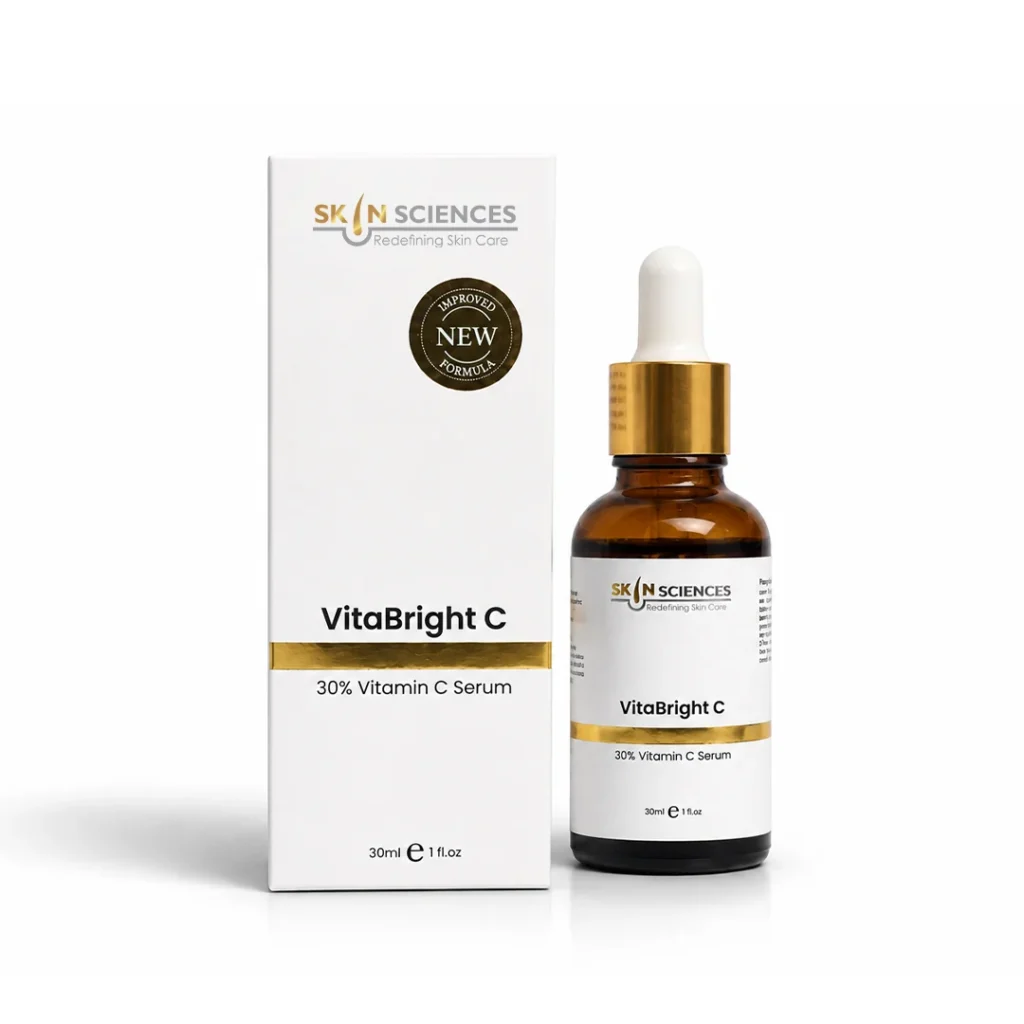
Skin sciences is one option to consider if you are looking for a vitamin C serum with local availability and a practical price point. Its formula, packaging, and ingredient list should be reviewed before purchase, just as you would evaluate any other skincare product.
If you are comparing products, look for a clearly stated vitamin C concentration, suitable packaging, and a formula that fits your skin’s needs. An affordable vitamin C serum can be a good choice when it offers appropriate ingredients and consistent quality.
You can explore the product here: [best vitamin c serum](AAPKA URL).
Results may vary from person to person.
FAQs:
Can I use Vitamin C serum every day?
Yes, many people can use vitamin C serum every day once their skin has adjusted. Start two or three times per week if you are a beginner or have sensitive skin. Apply it in the morning before moisturizer and sunscreen. If redness, burning, or persistent irritation develops, reduce use or stop the product.
Does Vitamin C serum really work?
Vitamin C serum can work, but results depend on the form of vitamin C, concentration, product stability, and consistent use. Clinical studies suggest that topical vitamin C may improve the appearance of pigmentation and photoageing. It is not a guaranteed treatment, and visible changes often take several weeks.
What should you not mix with Vitamin C?
Vitamin C can be used with many skincare ingredients, but combining it with strong exfoliating acids, benzoyl peroxide, or retinol may increase irritation for some people. This does not mean the ingredients are always incompatible. Introduce one active product at a time and avoid using several irritating products together.
Why is my Vitamin C serum turning orange?
Vitamin C serum may turn orange or brown because of oxidation. Exposure to air, heat, and light can contribute to colour changes. A slight change may not mean the product is unusable, but a significantly darkened serum may have lost some of its effectiveness. Check the product’s storage instructions and expiry date.
Can I use Vitamin C serum with niacinamide?
Yes. Vitamin C and niacinamide can generally be used together. Both are popular skincare ingredients for supporting brighter-looking, more even-toned skin. If you have sensitive skin, introduce them separately so you can identify any irritation. A simple routine with vitamin C, niacinamide, moisturizer, and sunscreen may be suitable.
Which Vitamin C serum is best for sensitive skin?
The best vitamin C serum for sensitive skin is one that is gentle, stable, and well tolerated. Look for a lower-strength formula or a vitamin C derivative such as sodium ascorbyl phosphate. Fragrance-free products may be preferable for some people. Patch test first and introduce the serum gradually.
Final Thoughts:
The best vitamin C serum is not necessarily the strongest or most expensive option. It is the product that suits your skin type, contains a well-formulated vitamin C ingredient, and fits comfortably into your daily routine.
For Pakistani skin, antioxidant care is most useful when combined with sunscreen, moisturizer, and sensible storage. Start slowly, avoid unnecessary irritation, and give the product enough time to show results.
Whether you choose a pure vitamin C serum or a stable derivative, consistency matters more than chasing quick changes. If pigmentation persists or your skin becomes irritated, a dermatologist can help you choose a suitable treatment.